Monday, December 20, 2010

3D Hologram Prints Invade Military, Commercial Design (videos)

3D Hologram Prints Invade Military, Commercial Design (videos): "
Zebra Imaging digital print


Many technologies claim to be holograms, but there’s really only one that truly deserves the name. If you have to wear special glasses, it’s not a real hologram. For decades, scientists have been able to use lasers to record three dimensional images on a flat surface, but these images have been very simple and were often difficult to view without more laser light. Now, a new generation of hologram companies are making 3D holograms that are photo realistic and can be viewed under simple LED and halogen bulbs. Zebra Imaging, based in Austin, Texas, is one of these new kind of hologram companies, and they’ve sold tens of thousands of custom-made digital prints, many to the US military for mission planing and bomb analysis. Watch their holographic prints on display in the videos below, along with a brief look at their new motion display technology, which is like a 3D computer screen. There’s nothing quite as cool as a real hologram.


In the past few years, researchers in holography have been able to streamline and modernize the holographic printing process so that they can take CAD drawings or real world images and convert them into a hologram quickly. Zebra Imaging takes about 7-10 business days to process images into a print. That’s a fairly quick turn around time, and it opens up their use for a variety of purposes. One of the chief customers has been the US Army who not only has purchased more than 10,000 prints, but recently started using Zebra’s M2 imagers in the field. The M2 allows a soldier or technician to record the visual information needed to create a hologram – sort of the holography version of a camera. Zebra also has a variety of commercial applications, including displays for trade shows, industrial design, and marketing. CTO Michael Klug explains more in the video below:


Here’s a longer look at a military application for Zebra’s “Zscape” holographic prints. (Note: the video seems to end around 0:30, no idea why the timer continues beyond that.)


Zebra Imaging digital print of explosion

The US Army has used Zebra's prints to help reconstruct and understand bomb sites after the explosion.


As you can see in the videos, the hologram print looks like a flat sheet of plastic on metal. Embedded on that sheet however, is over 300,000 3D views. By traveling around the print (or moving it) you see each of these hundreds of thousands of views and the parallax makes the image appear perfectly three dimensional. Zebra, however, can put those 300,000 views to an even more interesting use: combining multiple images into the same print. In the following video you’ll see how traveling around this print causes the 3D image you see to ’switch’ midway. Very cool.


For now, the price this holography is still a little high to be used in many possible applications. The smallest single color prints from Zebra cost $700, with full 2′ x 3′ color prints ranging up to $3500. Not bad if you have a military budget, but pretty steep for the rest of us. Considering how much progress has already been made in holography, however, I’m fairly confident we’ll see these prices come down considerably in the years ahead (if not at Zebra then through one of their competitors).

Zebra Imaging motion display

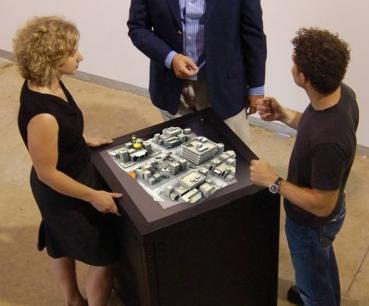
Zebra's motion display setup lets you see 3D images rendered in real time.


Moving away from prints, Zebra has also developed a remarkable real time holographic motion display. Like a computer screen, the motion display can show you images changing over time that you can interact with. Unlike you computer screen, these images are shown in 3D and without the need for glasses. Zebra’s motion display was developed with help from DARPA, who is probably giddy over the possible military applications (picturing a battle in 3D as it evolves is right up their alley). The system works by taking 3D digital information, rendering it with commercial software, and displaying it through a podium like structure. Unfortunately, Zebra has only released one video of the motion display in action, and its very brief. Below you’ll see a LIDAR image of the MIT campus as it is rendered in real time using the motion display. Check it out:


As cool as Zebra Imaging’s holography may be, the field of holography as a whole has been very slow in development. I’m sure we all saw some kind of holographic image growing up. As I said in the beginning, holograms have been here for decades (even before we had reliable lasers). The real innovation is the quality of images produced and the speed at which they can be made. A business week turn around time is fast enough for holograms to be used in a wide variety of applications. Military purposes are interesting, but they’re just the tip of the iceberg. As holography technology keeps improving we’ll be able to make these prints quicker, larger, and easier. 3D hologram prints could become a fixture for advertising, architecture, and medical displays. Imagine dozens of MRI images each showing a slice of your brain being contained in a single 3D hologram. Or walk down the street and every poster and billboard could reach out to you in 3D, or evolve as you move past. Eventually we could be using holographic displays instead of LCD TVs and monitors. The technology is still rather limited now, but it is improving. As companies like Zebra Imaging prove there is considerable financial gain to be had. I think holography will develop more and more quickly. In the meantime I really just enjoy looking at the amazing 3D images we can already produce. Everybody loves a hologram.


Here’s proof:


[image and video credits: Zebra Imaging]

[source: Zebra Imaging]


"

Thursday, December 16, 2010

Tuesday, December 14, 2010

Monday, December 13, 2010

MIT Uses XBox Kinect to Create Low Cost Minority Report Interface (video)

MIT Uses XBox Kinect to Create Low Cost Minority Report Interface (video): "
Minority Report Interface Using Kinect

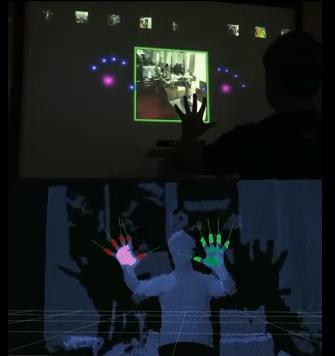
Minority Report has come to life thanks to the Kinect and MIT.


In the movie Minority Report, Tom Cruise uses an advanced user interface system that lets him control media files with nothing more than a gesture from his gloved hands. He could do the same now with little more than an XBox. A member of the research staff at MIT’s Computer Science and Artificial Intelligence Laboratory (CSAIL) has created a Minority Report interface using the Kinect 3D sensor and a bunch of open source software. Not only does the device only cost $150, you can use it without any dorky gloves. Garratt Gallagher, the interfaces’s creator, shows off some basic gesture controls in the video below. It really does look like it came straight out of the movie. Awesome.


Did Microsoft understand what they were doing when they put a $150 3D motion tracker on the market? This thing is a hacker’s dream come true! We’ve seen some amazing projects recently that take advantage of the Kinect sensor. A student at MIT (not Gallagher) hooked a Kinect up to a robot and had it detecting people and following gesture commands in no time. Everywhere you go on YouTube you’ll see new projects that use the Kinect as everything from a range finder to a puppet control system. Gallagher’s Minority Report interface, however, stands out as one of the more impressive displays of the sensor’s accuracy. It can detect hands from among 60,000 points of data collected by the Kinect (see the dots in the bottom half of the video), and it can track the motion of hands and fingers at 30 frames per second. That’s more than fast enough for practical applications, as you can see:


Compare Gallagher’s setup to the original system shown in the movie. Tom Cruise’s interface may be flashier, but I’d say the two are pretty damn similar. And again, no gloves needed for Gallagher.


For those who regularly follow Singularity Hub, you’ll remember that the scientist who was asked to design the original interface shown in the movie, John Underkoffler, is also from MIT. He’s spent the last several years taking his concept and making it a real-world system called G-speak. His company, Oblong, is actively perfecting that platform for market. Gallagher’s creation has to be a kick in the pants to Underkoffler. It may not look at nice as G-speak, but it’s certainly much cheaper.


And Gallagher did it all using open source software! He relied on LibFreenect as the driver to get the Kinect talking to Linux. Point Cloud Library (PCL) handles the complex geometry created by the enormous number of spots detected by the Kinect. PCL is being developed for the Robot Operating System (ROS) by Gallagher and others at MIT. Gallagher also created his own hand detection tools for ROS which are pretty cool.


The great part of all these packages of open source software is that they can be used, modified, and shared for free. A few weeks ago, in fact, Gallagher was demonstrating a remarkably similar setup he used to create a virtual piano you could play with the Kinect. Watch it in the video below. Open source software is the path to wonderfully accelerated research…and fun musical instruments!


According to CSAIL, Gallagher wants the Minority Report interface to inspire new research with robots. His future plans for the Kinect will see it as part of a system to guide robotic manipulation. Other major robot developers, like Willow Garage, are working on similar projects. Having played with the Kinect in the way it was intended – as a video game controller for the XBox – I have to say that I like these applications much better. Hitting a virtual ping pong ball with your hand is mildly enjoyable. Controlling a real-world robot with the flick of a wrist is frikkin’ awesome. Kudos, Gallagher, and keep up the good work!


[screen capture and video credit: MIT CSAIL]

[source: MIT CSAIL]


"

Thursday, December 9, 2010

Robotic Butcher: Award Winning Bot De-Bones Meat Like A Pro (video)

Robotic Butcher: Award Winning Bot De-Bones Meat Like A Pro (video): "
deboning-robot

We're teaching robots how to carve bones from flesh. Good idea or bad idea?


Sometimes the similarities between human and pig bodies is neat. Right now it’s terrifying. That’s because I’ve just seen a robot that can carve the bone out of a ham hock in a few seconds. Japan’s 4th annual Robot Awards of the Year hailed Mayekawa’s HAMDAS-R as one of the best innovations for small business. De-boning meat has typically been the work of skilled human butchers on an assembly line. The HADMAS-R would let companies de-bone 500 hams in an hour using only 10 workers instead of the normal 20. Labor costs aren’t the only thing this robot may be cutting in half. Mayekawa has plans to expand its carving skills to include fish, vegetables and other food products. Basically, any “irregularly shaped soft items” are fair game for robotic dismemberment. Watch the HAMDAS-R slice bones from pig flesh in the video below. I don’t know about you, but this ‘irregularly shaped soft item’ is a little intimidated by that robot’s expertise with a knife.


Forget the allusions to robotic physical violence and you may still find the HAMDAS-R threatening. That’s because every part of the food industry is vulnerable to automation. From harvesting fruit to milking cows, we’re designing robots that can replace humans at their jobs. Despite the disruptions to employment this may cause, there are some clear advantages to giving hard labor to bots. As Mayekawa shows, machines can help human workers do the food processing jobs faster when such workers can’t be replaced outright. They also improve sanitation conditions, and provide consistency in output. The economic incentives are clear, and so we’re likely to see automation claim a bigger role in all levels of food production in the years ahead. I’m in favor of efficiency, so I can’t complain. Still, for the sake of fore-stalling the eventual robotic apocalypse, can we all agree not to give this robot wheels? A machine that can pluck the bone out of my leg is nightmarish enough, if I saw one that could chase me down to do it I’d never sleep again.


*Thanks to DrNemmo for the ‘irregularly shaped soft item’ joke.

[screen capture and video credits: DigInfo News]

[sources: DigInfo News, Mayekawa]


"

Photo

Photo: "

"

Kitchen Special – Only The Best Tools Will Do!

Kitchen Special – Only The Best Tools Will Do!: "

The festive season is a time when your entire family comes together for the holidays. With a house full of hungry tummies to feed, the kitchen ends up being the hotspot for all to hang out. Here are some ideas to spice up your kitchen and make it feel warm, inviting and elegant. I bet you’re cooking up a handsome feast for all!


Trinity Holder by Lisa Hilland


Having a bowl full of savories for the munchies is a very good idea. I usually have finger foods, candies and nuts put out so that anyone passing by can easily pickup a handful. The Trinity holder is perfect for this, simply because you can have a spread of three things in one go.


Colors: Black & White

Price: $59


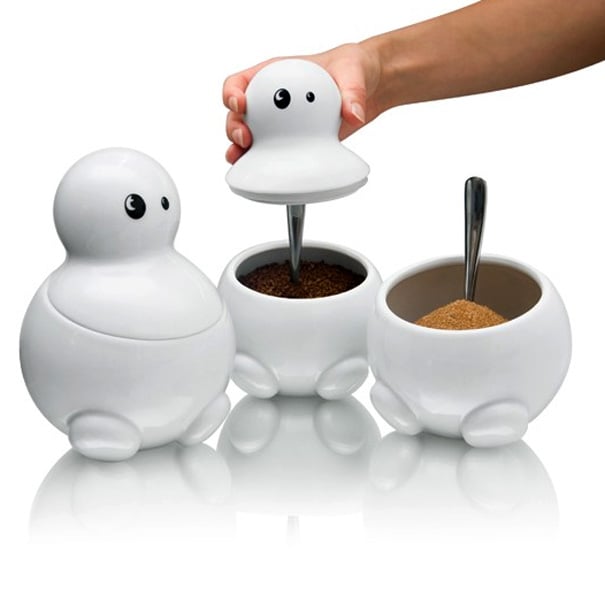
Tom, Dick & Harry Thabto


Tea, coffee or me? Haha! With family around, let the third jar be sugar, just this once!


Price: $49


Pipette Vinegar Bottles by Camilla Kropp


This condiment container set presents a very scientific way of flavoring your meal. I’m sure curious children will love to have it on the table.


Price: Set of 2 for $59


Magnetic Spice Stand by Zevro


Besides being a space saver, the Magnetic Spice Stand does your kitchen proud by displaying all the exotic spices you’ve invested in.


Price: $49.00


SmartSpace Food Dispenser by Zevro


This is such a clever way of holding grains and pasts or breakfast cereal. It can’t get smarter than this…. save space and have something interesting adorning your kitchen wall.


Price: $47.00


Orb Pestle & Mortar by Joseph Joseph


This is a classy pestle & mortar that you can leave right on the countertop and ever so subtly get someone else to do the pounding and grinding. How wicked are we!


Price: $30


Nest 8 Nesting Set by Joseph Joseph


What’s really attractive about this set are the colors and functionality. At one go you have bowls, sieves, measuring cups, strainers, etc. nestled together. They add a dash of vibrant energy to the room.


Price: $50


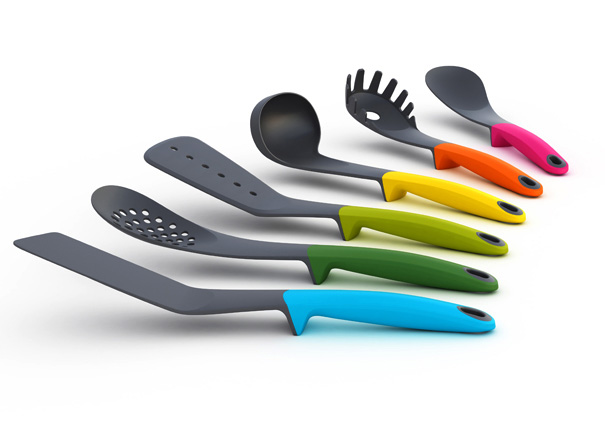
Elevate Utensils by Joseph Joseph


The Elevate Utensils set keeps countertops clean and food right where they should be, the pot and your stomach. There’s a tiny kick-up joint that elevates the tool-end. Hygiene makes food taste better.


Price: $40 for multicolor pack of 6


Bowlboard by Ute Australian Design


The Bowlboard has four cups embedded into the board and is quite convenient as a prep station.


Price: $69


Index Plus Chopping Board by Joseph Joseph


A set of color coded knives and chopping boards keep your foods from cross-contaminating. Every professional chef has something like this except the Index Chopping Board is better designed and looks really nice in the kitchen.


Price: $80


----------


Yanko Design

Timeless Designs - Explore wonderful concepts from around the world!

Yanko Design Store - We are about more than just concepts. See what's hot at the YD Store!


"

Giant Robotic Dust Ball

Giant Robotic Dust Ball: "

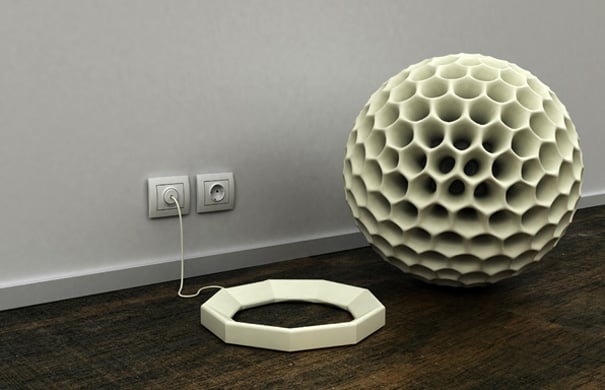
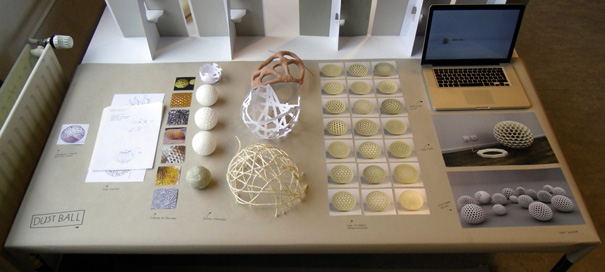
A giant dust ball that cleans dust balls? The idea is too weird and too good. I’m sold. The motor inside doubles as the dust bin and drives the unit by rotating on 2 axes to generate enough force to move. When full, it automatically returns to its starting point and glows. Again, LOVE IT but there’s a reason why most floor cleaning robots are short and squat.


Designer: Dave Hakkens


----------


Yanko Design

Timeless Designs - Explore wonderful concepts from around the world!

Yanko Design Store - We are about more than just concepts. See what's hot at the YD Store!


"

It Holds Keys and Hangs Coats

It Holds Keys and Hangs Coats: "

I’m usually pretty good about keeping my keys and travel chotchkies in one place. I’m ambivalent about tossing them in a bowl or hanging them by the door. Ugh, that’s the worse because it’s just a constant reminder of Los Angeles traffic every time I walk by. I digress. If I had something like the Blomp Coathanger – my issues would be alleviated. Love the receptacle to keep all your crap and hide them from view with a coat. Done and done. They look technical but it’s all handmade from poly-resin. Brills!


Designer: David Cathro


----------


Yanko Design

Timeless Designs - Explore wonderful concepts from around the world!

Yanko Design Store - We are about more than just concepts. See what's hot at the YD Store!


"